
TravelerPart S1-014
Home › How We Build Playgrounds › Manufacturing
Playground Equipment Manufacturing Galvanized Steel, Rotomolded Plastic, Powder Coating and Soft Play Foam
Galvanized playground equipment made in our own workshops for parks departments, schools, dealers, installers, OEM brands and indoor venue owners. Every frame is welded complete, then hot-dip galvanized as one assembly, so the welds sit under the zinc.
- Cut
- Bend
- Weld
- Grind
- Drill vents
- Galvanize · partner plant
- Sweep blast
- Powder coat · RAL
- Cure · our oven
- → Pre-assembly
- Welded complete, galvanized to ASTM A123 or ISO 1461
- RAL powder topcoat, cured in our oven
- LLDPE from our own steel molds
- 19 mm HDPE, edges rounded in the cut
- Every outdoor structure pre-assembled
02/ 13Routes · steel · LLDPE · HDPE · foam + PVC
Manufacturing Processes Four Material Routes Through Our Workshops
Every part on your installation drawing starts as one of four materials: steel tube, LLDPE resin, HDPE sheet, or foam with PVC leather. Each material has its own route through the factory, and all four routes finish at the pre-assembly yard and the packing line.
Pick a route to open its steps. Each step links to the section that explains it.
Steel tubePosts, frames, rails and decksThe longest route, because the steel carries the structure.
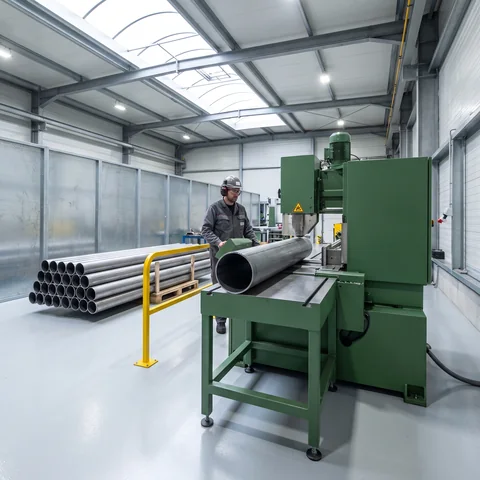 CNC cutTube cut to the lengths on your drawing.
- BendCNC bendCurved rails in one piece.
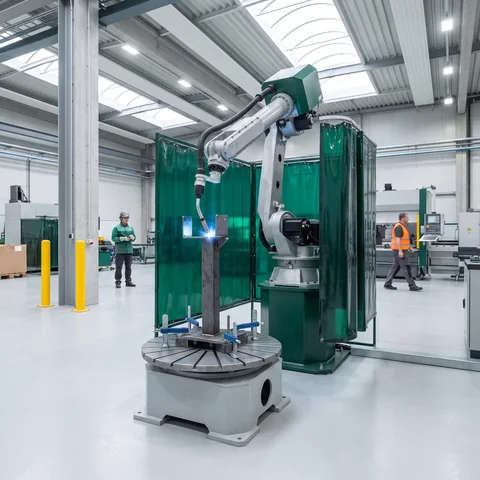 WeldComplete frames, brackets attached.
- GrindGrindSpatter and slag off every joint.
- VentsDrill ventsHoles so zinc flows in and out.
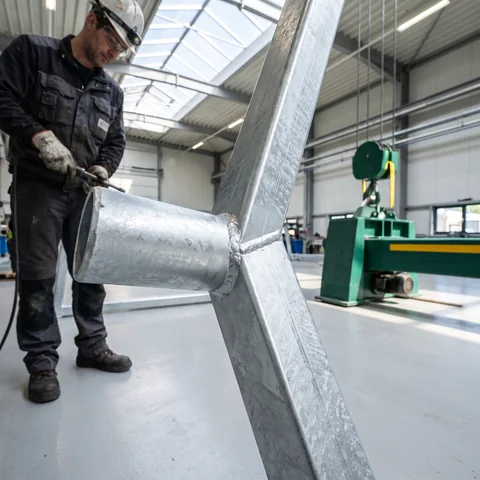 PartnerGalvanizeWhole assembly, ASTM A123 or ISO 1461.
- Sweep blastSweep blastZinc roughened for the powder.
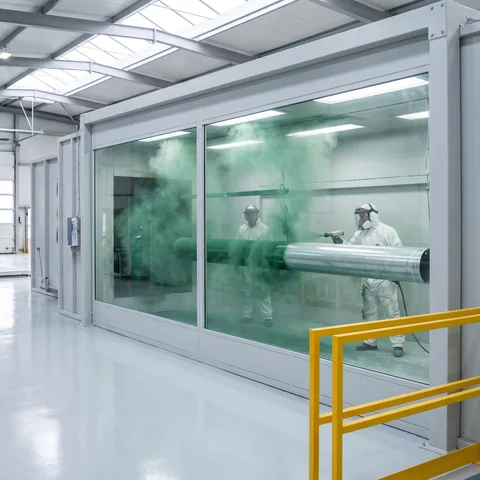 Powder coatPolyester in your RAL color.
- OvenCureIn our own curing oven.
Deck branch · punch → plastisol dip (partner) → fix at pre-assembly
LLDPE resinSlides, tunnels, roofs, spring-rider bodies and post caps
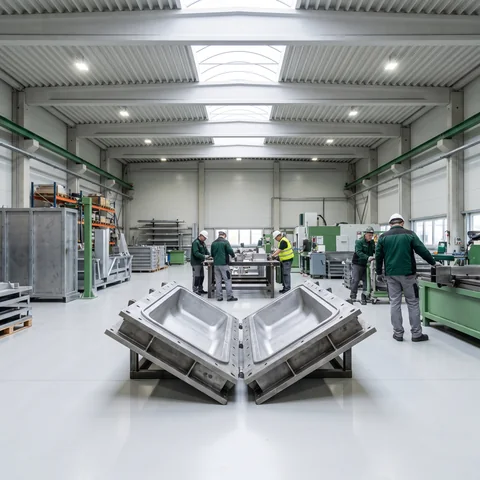 Own steel moldThe same mold for every repeat.
- 2 axesBiaxial rotationA seamless wall, no joints.
- CoolCool in the moldStill turning while it sets.
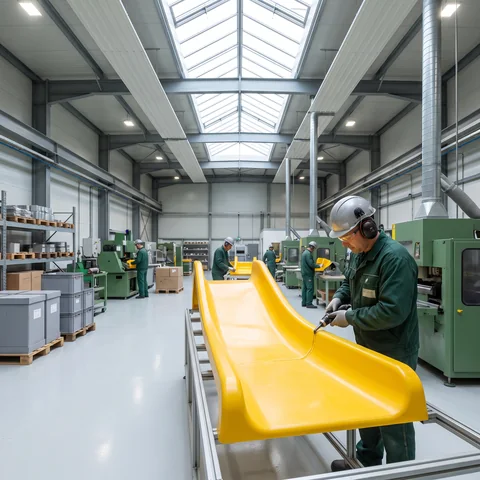 Trim + drillFixing holes to your drawing.
- Colored through the wall8 mm nominal wallOwn steel molds since 2014
HDPE sheetPanels, theme panels and signage
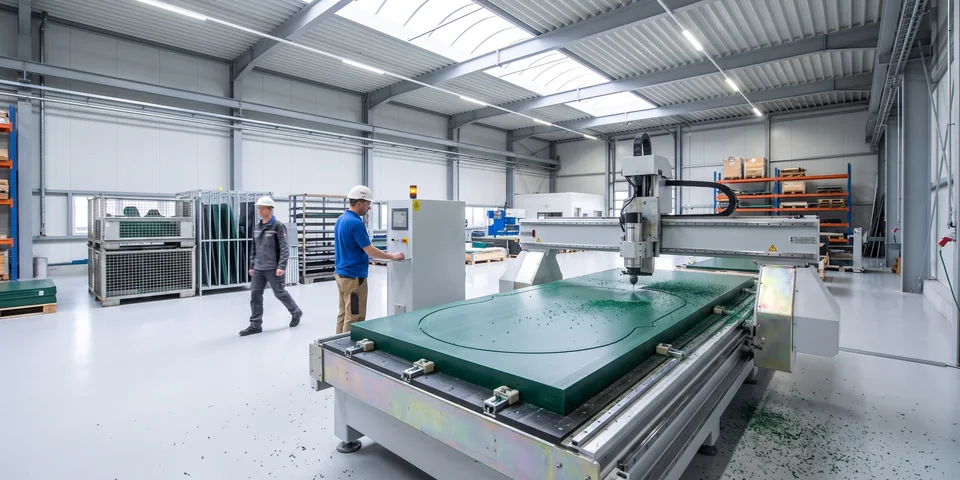 CNC cut + edge round · one pass19 mm sheet, no separate edge step.
- 19 mm UV-stable sheetNo separate edge stepTwo-color engraving or inlay
Foam + PVC leatherPadding, covers, mats and netting
- FoamCut foamSized from the steel frame.
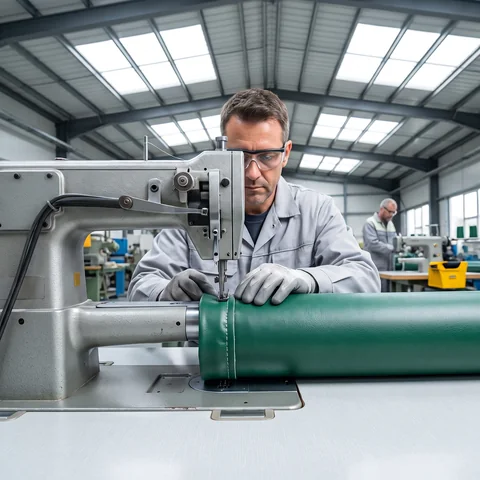 Sew coverFire-retardant PVC leather.
- SealHeat-sealClosed, smooth edges.
- Velcro · zipClosuresPipe covers come off to clean.
- Fire-retardant PVC leatherVelcro or zip closuresLabeled to the structure number
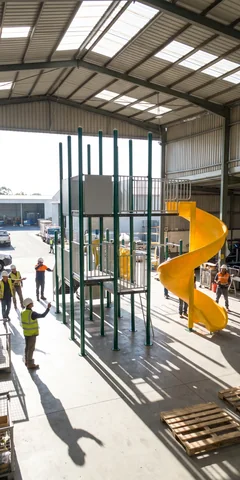
The steel route carries the most steps, because the steel carries the structure. Each route is described below, in the order a part moves through it.
Checks between steps → About us · Project timeline → How we build playgrounds
03/ 13Steel · cut · bend
Steel Cutting and Bending CNC Tube Cutting and CNC Pipe Bending to Your Drawing
Every steel part on your project starts as straight tube or pipe in the steel fabrication workshop. The workshop works from your approved installation drawing, and the part number on that drawing follows the part through every later process.
Cut
Posts, rails, beams and frame members are cut on CNC tube cutting machines to the lengths on your drawing. Outdoor posts are Ø114 mm steel tube with a 3.0 mm wall; soft play frames use Ø48 mm pipe. Swing top beams and shade posts are cut from the same Ø114 mm tube.
Bend
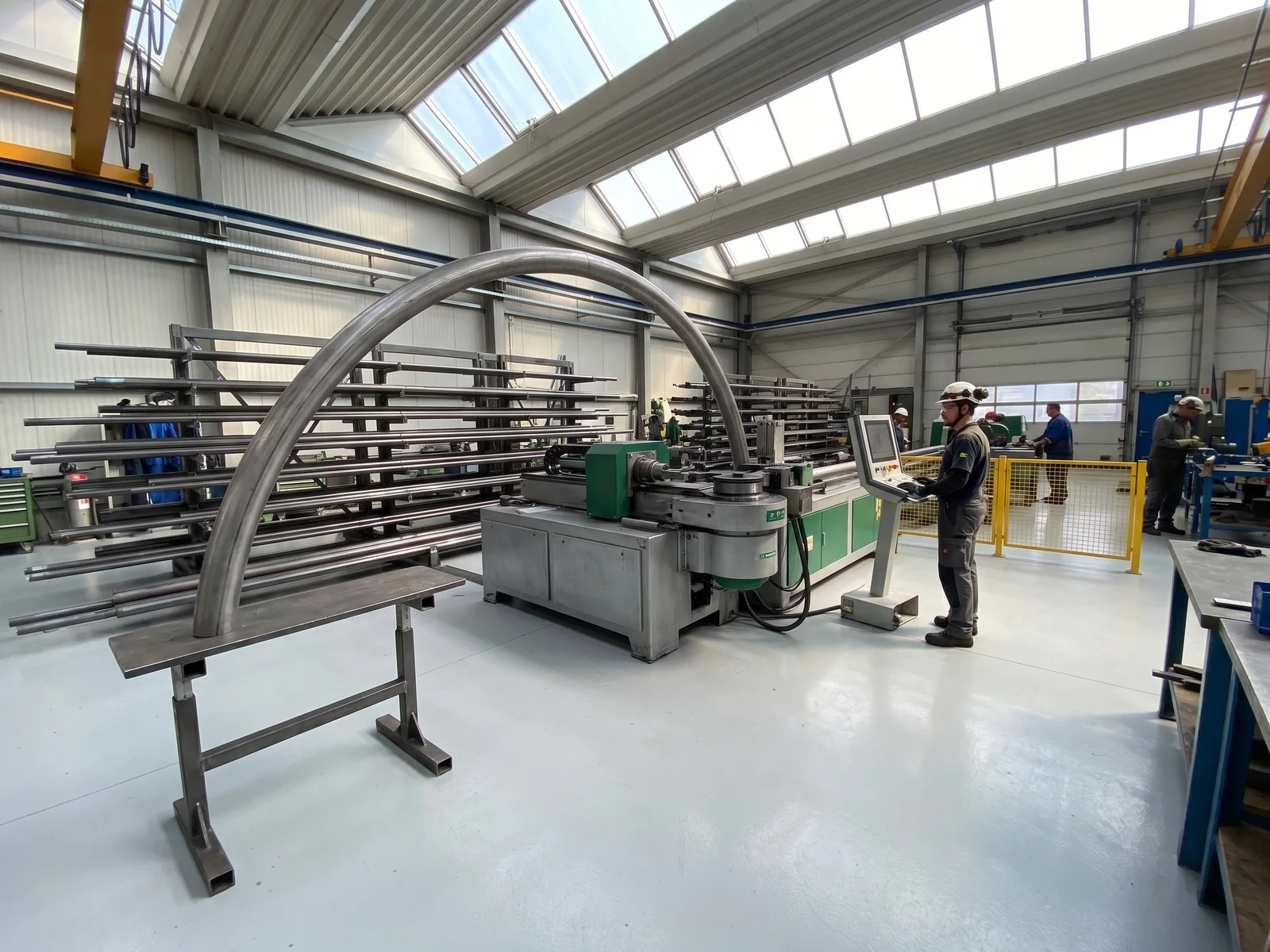
Curved rails, arches, loops on climbers and curved frame sections are formed on CNC pipe benders. A bent section replaces a joint that would otherwise be welded, so a curved rail is one piece of tube from end to end.
Why cutting and bending come first
Every hole position, joint and footing point on the installation drawing depends on the length and shape of these parts. Fixing them by CNC at the first step means the next three stations all receive parts that already match the drawing.
- S1-014 · welding table
- S1-014 · galvanizing plant
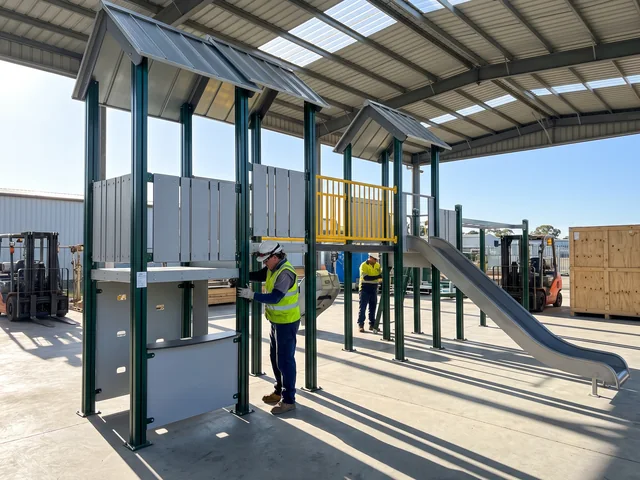
- S1-014 · pre-assembly yard
Material check on the tube before it reaches the cutter → About us
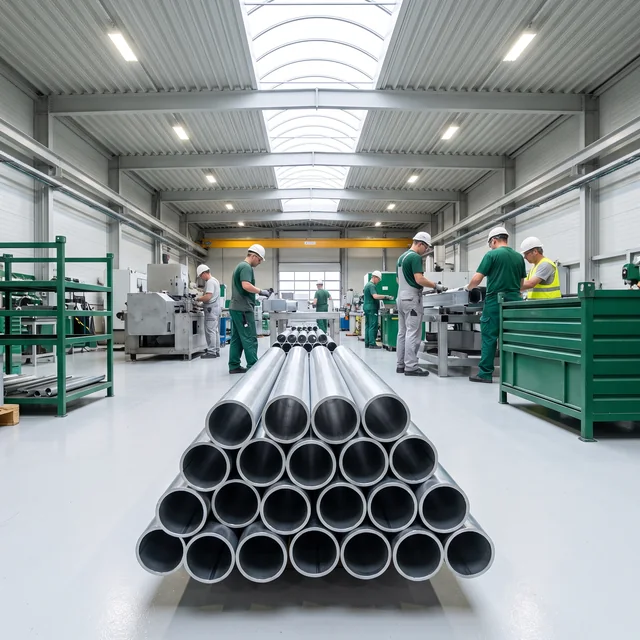 3.0 mm wall
Bent by CNC = one joint fewer to weld
04/ 13Steel · weld · grind · drill
Welding and Pre‑Galvanizing Preparation Complete Assemblies, Ground Welds, Vent and Drain Holes
Cut and bent members are joined into complete frames in the steel fabrication workshop. All welding is finished before any steel leaves for galvanizing, and each assembly is then prepared for the zinc bath.
Section through a closed post · cap plate, bracket, base plate
In-process weld check before parts leave the workshop → About us
05/ 13Steel · galvanize · partner plant
Hot-Dip Galvanizing Complete Welded Assemblies to ASTM A123 or ISO 1461
Hot-dip galvanizing is the layer of protection that sits directly on the steel of all our galvanized playground equipment: every outdoor post, frame and rail.
It is done at a partner galvanizing plant and is the first coating every welded assembly goes through, so each hot-dip galvanized playground frame carries zinc under its paint.
Which standard
If your specification names one of the two, that is the one on your project. The standard is written on the material spec sheet that comes with your quotation, so your specifier or tender board sees it before the order is placed.
Material spec sheet · galvanizing · hot-dip, complete welded assemblies, to ASTM A123ISO 1461
- 01Outside of every memberIn the bathZinc-coated
- 03Every weld, bracket and fixing plateIn the bathZinc-coated
- 02Inside the closed tube, through the vent holesIn the bathZinc-coated
- 04Cut ends and drilled holesIn the bathZinc-coated
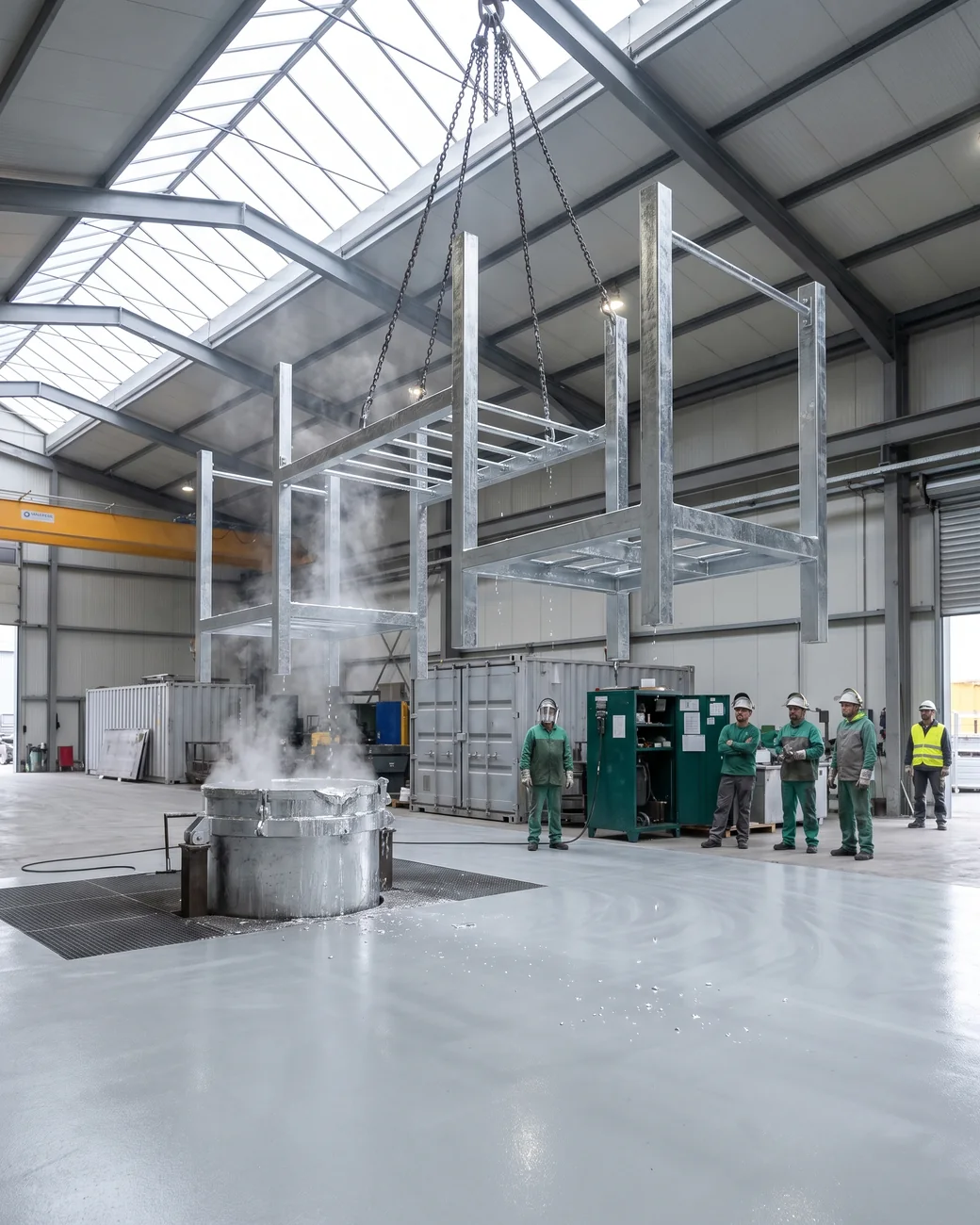
Why the whole assembly goes into the bath
The complete welded assembly from our workshop is dipped into molten zinc. When tube is galvanized first and welded afterwards, the weld burns the zinc off along the seam, and that seam has to be protected some other way. Galvanizing after welding leaves no seam of that kind on the frame.
Scheduling
Your welded assemblies go to the partner plant on the schedule your project manager sets back from your loading date, and come back to our own coating line for the rest of the finish.
Trampoline and ninja frames
Trampoline court frames are hot-dip galvanized in the same way. Exposed frame parts can then go through our powder coating line in RAL colors.
What you receive
The galvanizing standard on your spec sheet, and photos of your galvanized frames in the production updates after coating. Every weld on those frames was galvanized with the frame.
06/ 13Steel · blast · coat · cure
Sweep Blasting and Powder Coating Electrostatic Polyester Over the Zinc, Cured in Our Oven
When galvanized assemblies come back from the partner plant, they enter our own coating line. Every powder coated playground equipment part is prepared, coated in your color and cured on this line, right beside the powder booth.
Colors
Powder colors are chosen from the RAL chart. Dealers and OEM brands can use their own house colors for posts and rails; parks and schools can match a theme or site palette. The color is fixed on your approved drawing, and every part of that structure is coated in it.
Blast
Each galvanized assembly is given a sweep blast. A freshly galvanized surface is smooth, and powder does not grip it well. The sweep blast lightly roughens the zinc without blasting it away, giving the powder coat a surface to bond to. It is done on our line, right before the powder booth.
Spray
The blasted assembly is sprayed with polyester powder in an electrostatic booth. The charged powder is drawn onto the grounded steel, so it wraps around tube, into corners and over the weld seams, which have already been galvanized.
For projects that specify it, a primer coat goes on first, then the polyester topcoat.
Cure
The coated assembly goes into our own curing oven, where the powder melts, flows and hardens into a continuous film over the zinc.
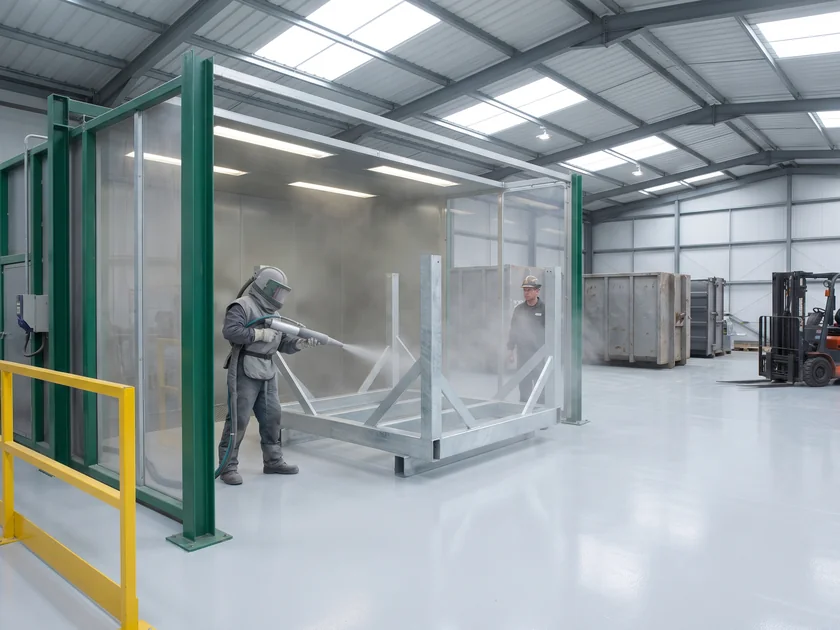
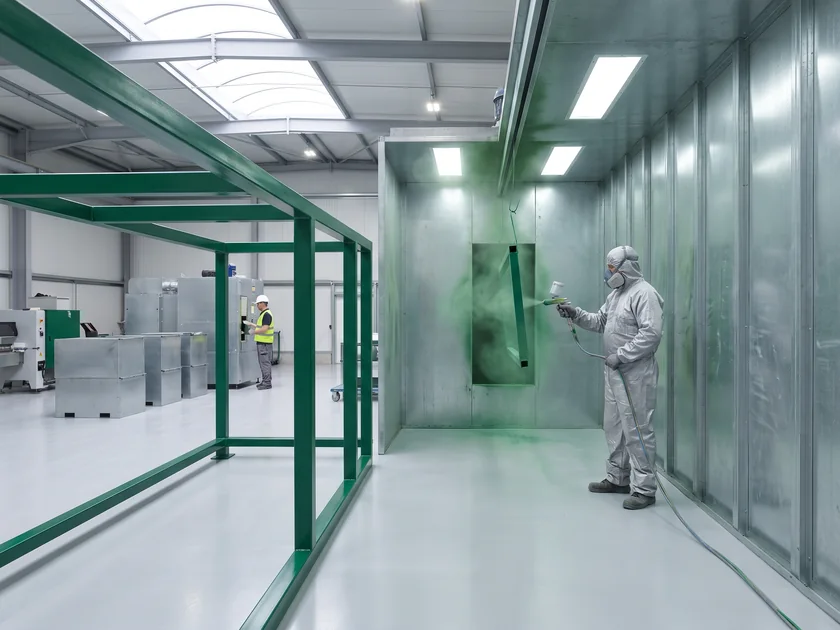
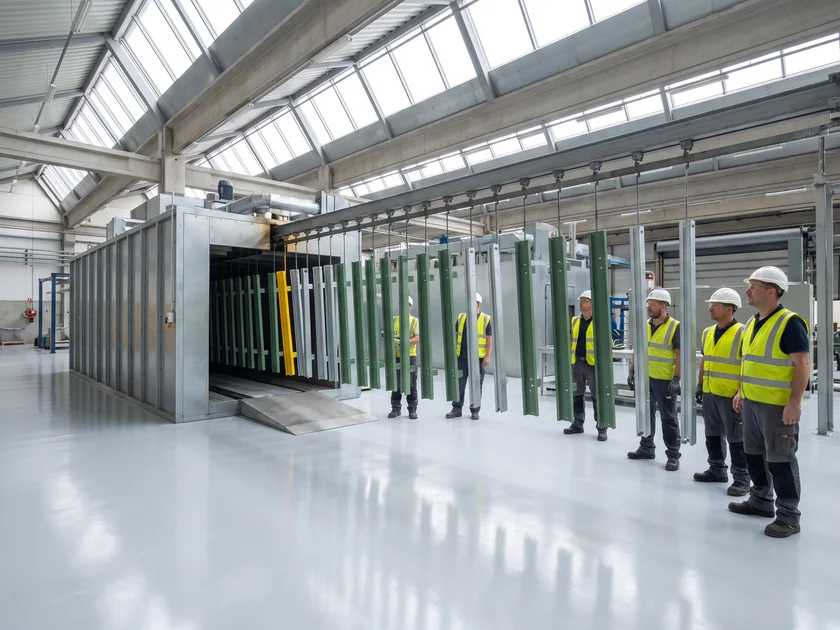
Coated parts move on to the pre-assembly yard · coating thickness and cross-hatch adhesion per batch → About us
Send the steel and finish section of your specification or tender. A material spec sheet naming the galvanizing standard, the powder coat system and the RAL colors comes back with your layout and quotation within 3 working days.
07/ 13Deck · punch · dip · fix
Deck Punching and Plastisol Coating Steel Decks and Steps
Decks and steps are the steel surfaces children stand and climb on. A deck is bolted to its frame, so it can take its own coating route and be dipped whole, underside included.
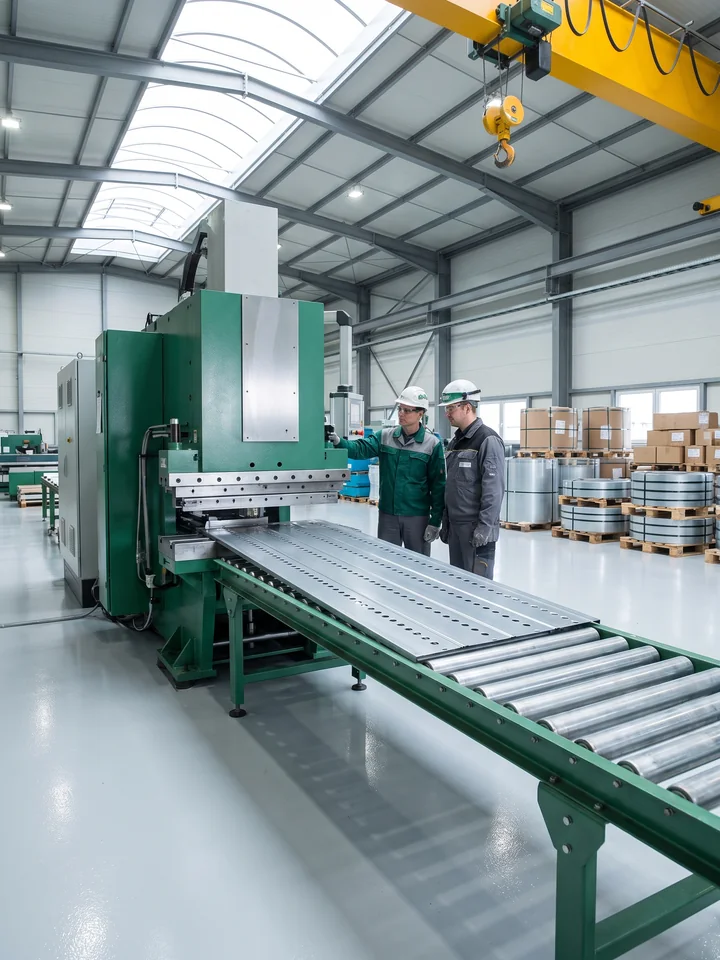 In-house
Punch
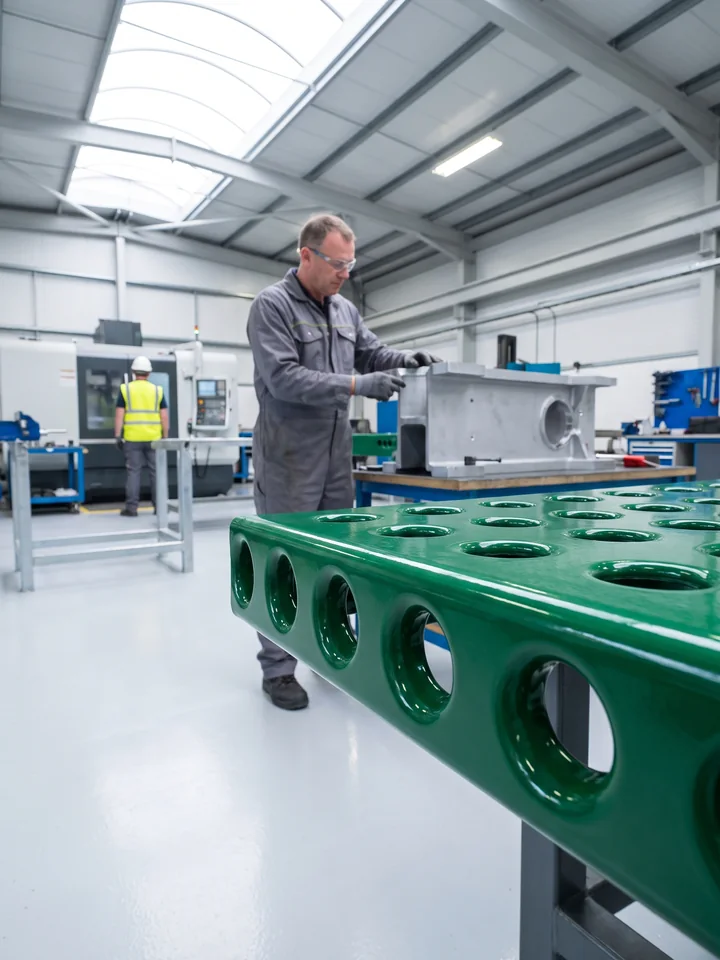
Deck sheet is punched in our steel fabrication workshop to the deck size on your installation drawing, so each deck fits the posts it is drawn between. Punching happens before coating.
 Partner-built
Dip
The punched decks are dip-coated in plastisol (PVC) at a partner coating plant. Dipping covers the top face, the underside, the edges and the inside of every punched hole in one process.
 In-house
Fix
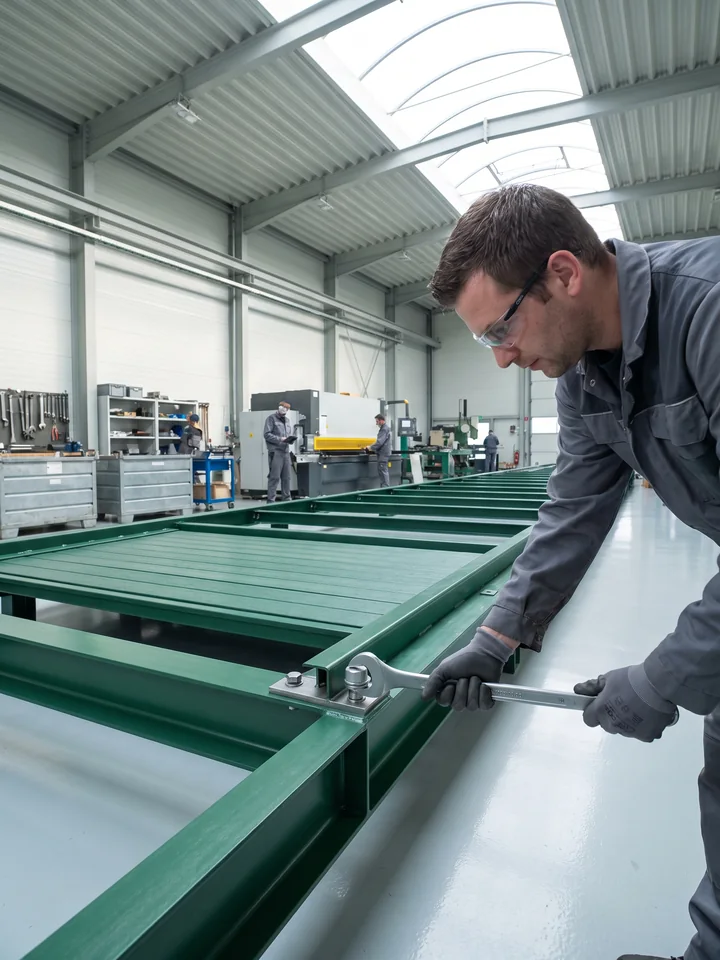
Coated decks come back to our factory and are fixed to the galvanized and powder-coated frame with 304 stainless steel fasteners at pre-assembly. Deck heights are checked against the installation drawing with every other connection.
The plastisol plant is one of our audited partner factories · how partner-coated parts are inspected → About us
08/ 13LLDPE · load · rotate · cool · trim
Rotomolding Biaxial Rotation in Our Own Steel Molds, Cooled, Trimmed and Drilled
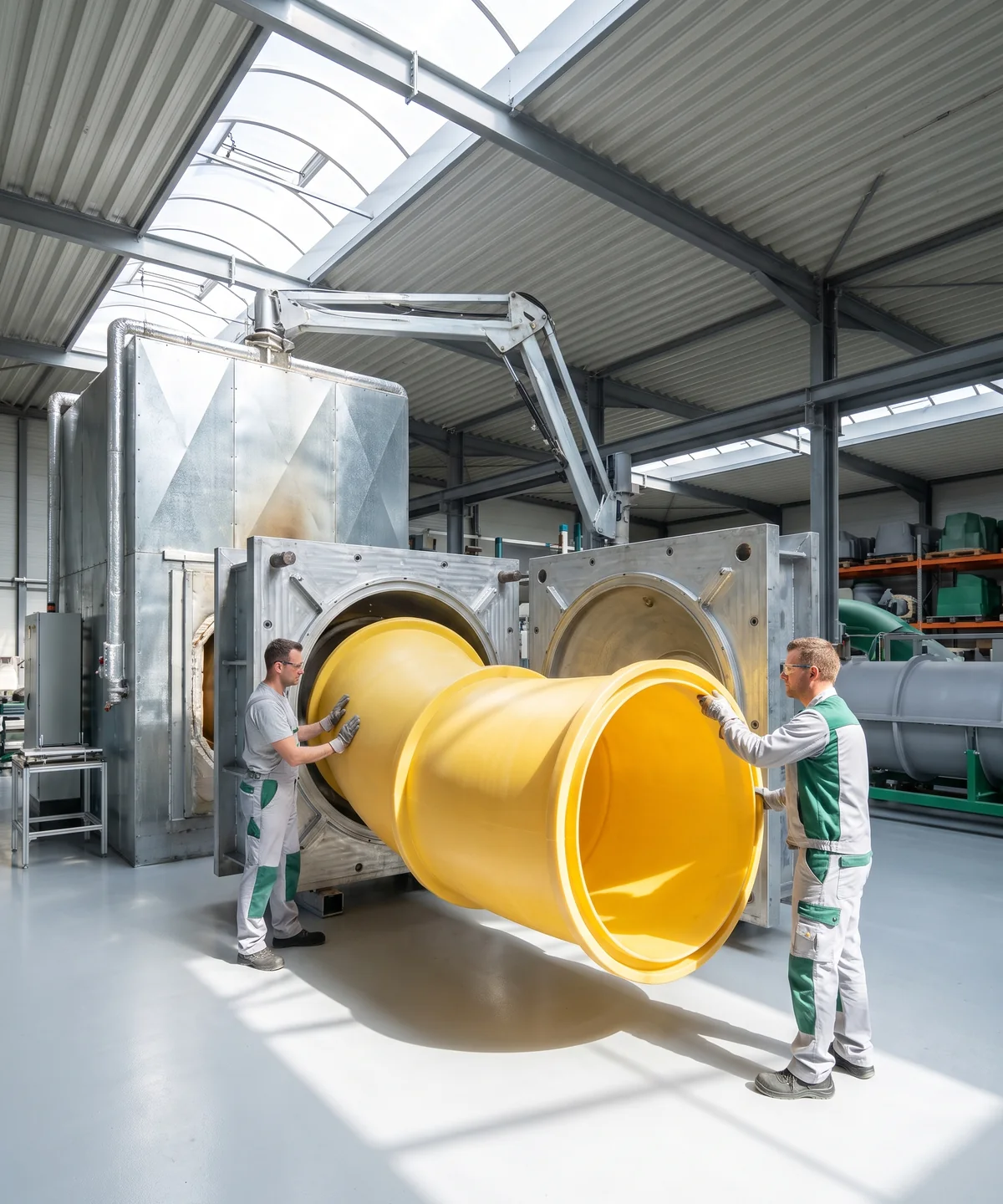
Slides, tunnels, roofs, spring-rider bodies and the post caps on our structures are rotomolded in our own rotomolding workshop, which we have run since 2014. Every one of our rotomolded playground slides comes out of a steel mold we own.
Resin
Each part is molded in UV-stabilized LLDPE. The color is in the resin itself, so the part is colored through the whole wall. Colors come from our standard range, or custom on request.
Load
A measured charge of resin is loaded into the steel mold, and the mold is closed.
Rotate
The mold turns on two axes at once while it is heated. As it turns, the resin melts and coats the inside of the mold evenly, building a wall of 8 mm nominal thickness on our slides. Biaxial rotation gives a hollow part like a tube slide or a tunnel a continuous wall with no seams and no joints.
Cool
After heating, the mold keeps turning while it cools, so the part holds the shape of the mold as the plastic sets. The part is demolded only once it has cooled.
Trim
Each part is trimmed at its openings and drilled for its fixings, to the connection points on your installation drawing, so a slide lines up with the deck and frame connections it is drawn to.
 Same color all the way through
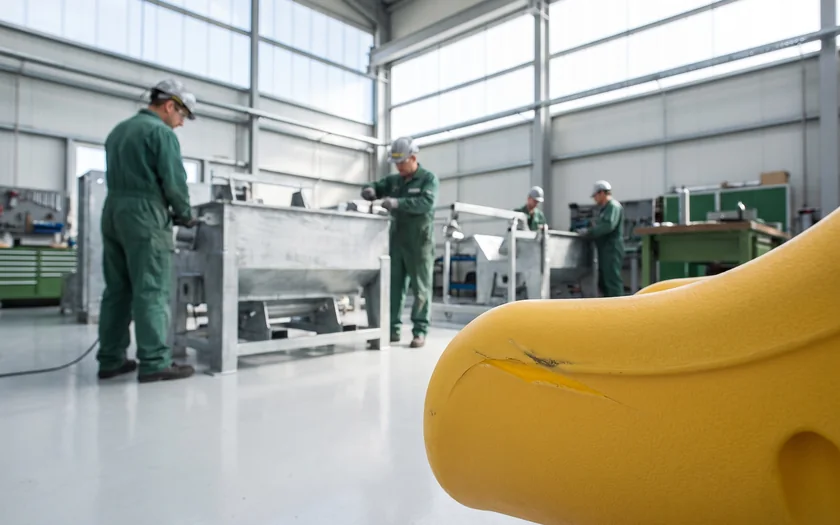
Colored through the wall
A scratch on a slide shows the same color as the surface around it.
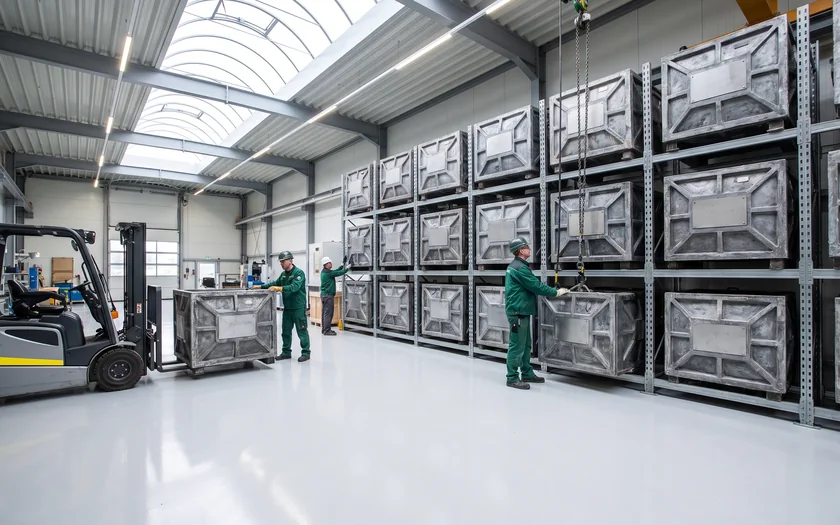
Same mold, same part
The mold decides the shape of every part it produces, and the same mold of ours is used whenever that part is made again.
Stainless alternative
For vandal-prone sites, a stainless steel slide can replace the rotomolded one. Stainless slides are partner-built and inspected by our QC before loading.
The wall-thickness measurement on every slide and tunnel → Soft play equipment
09/ 13HDPE · cut · round · engrave
HDPE Panel Cutting 19 mm Sheet, Edges Rounded in the Same CNC Pass, Two-Color Theme Panels
Play panels, infill panels, roof panels, theme panels and signage are cut in our panel and CNC workshop from UV-stable HDPE sheet, 19 mm thick.
That covers every one of our HDPE playground panels.
One pass for the cut and the edge
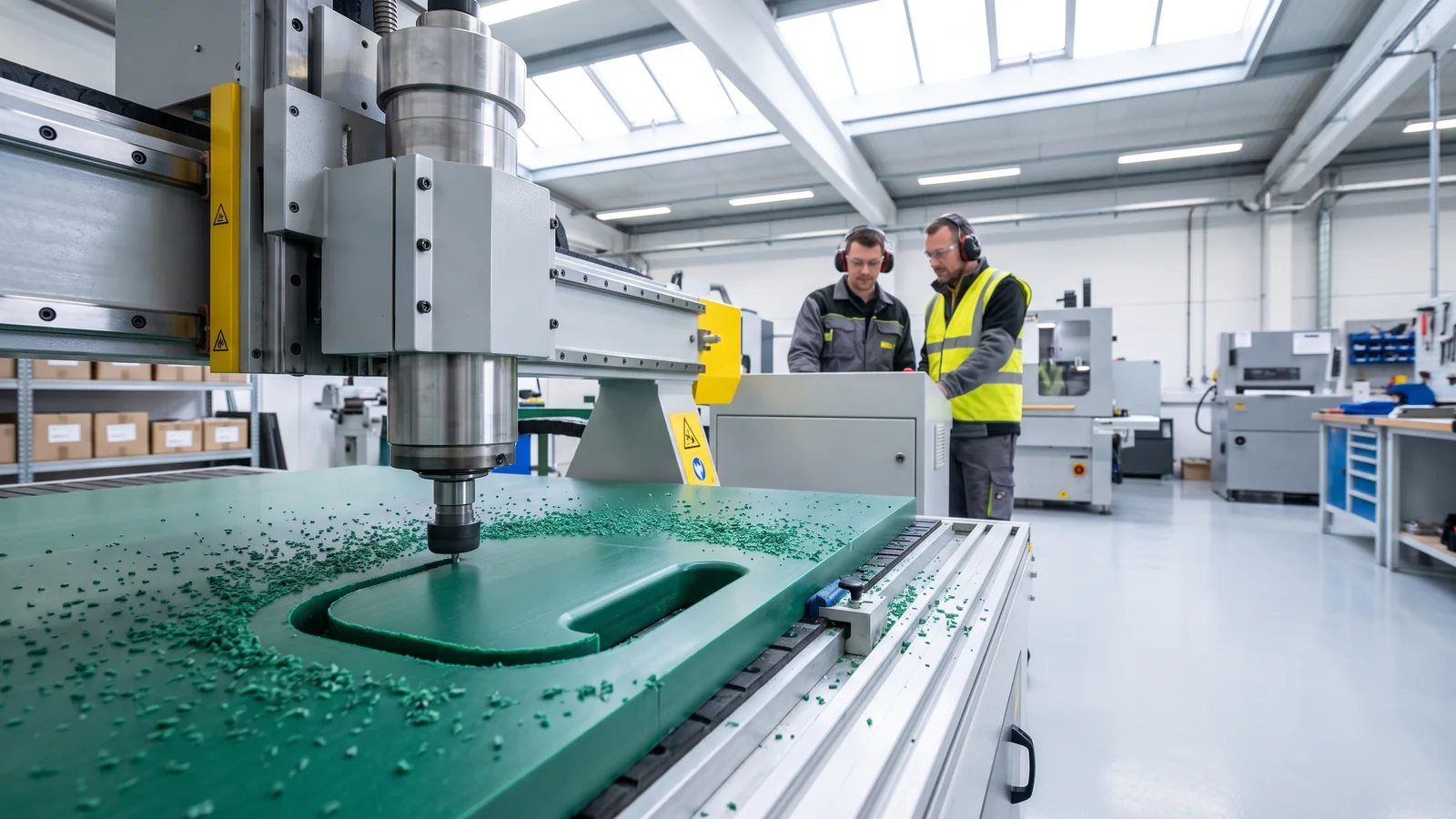
Each panel is cut on a CNC router, and the router rounds the edges in the same pass as the cut.
Every outline, window and handhold is rounded the moment it is cut, so the finished panel leaves the router with no sharp edge and needs no separate edge-finishing step.
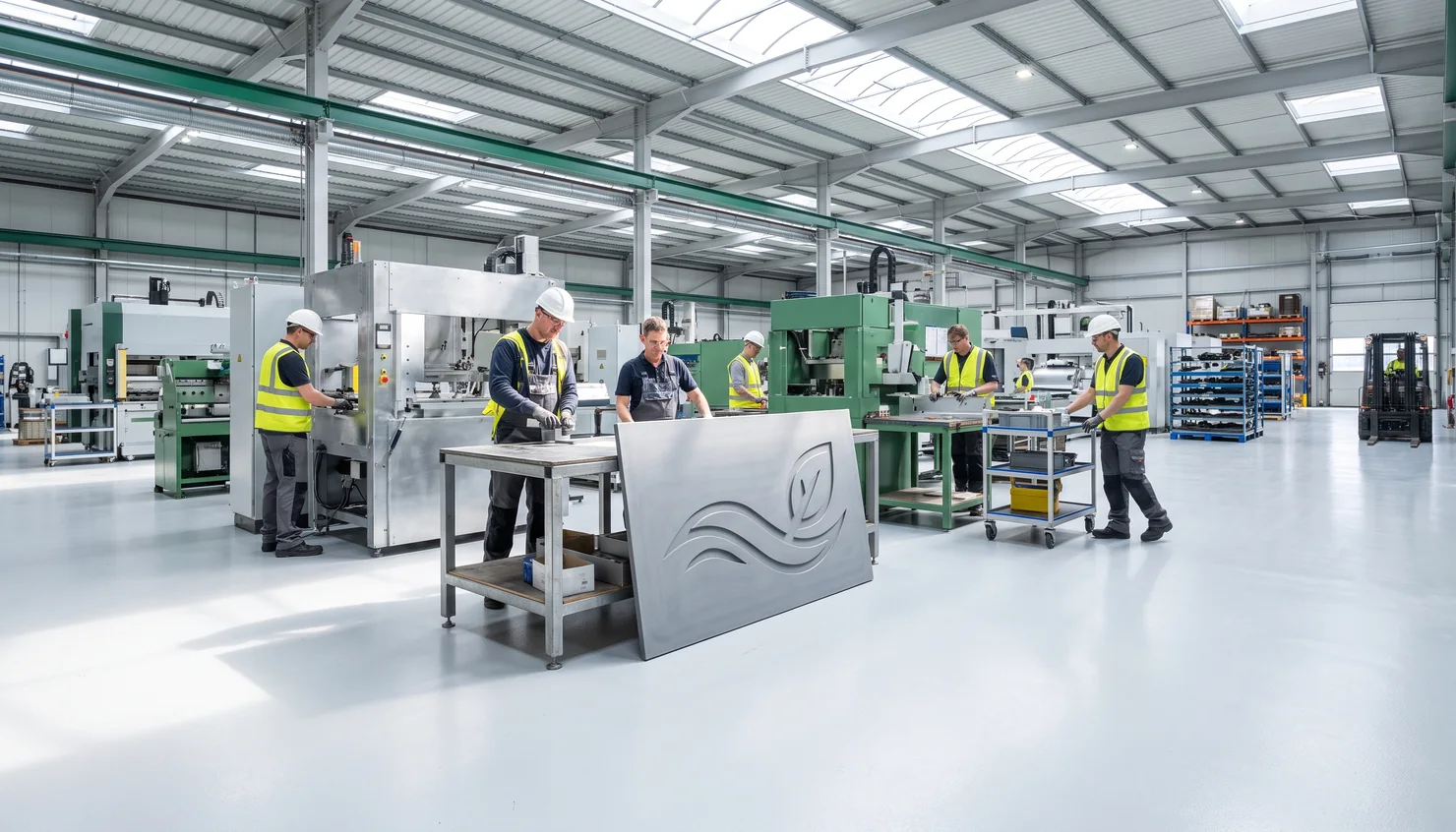
Two-color theme panels
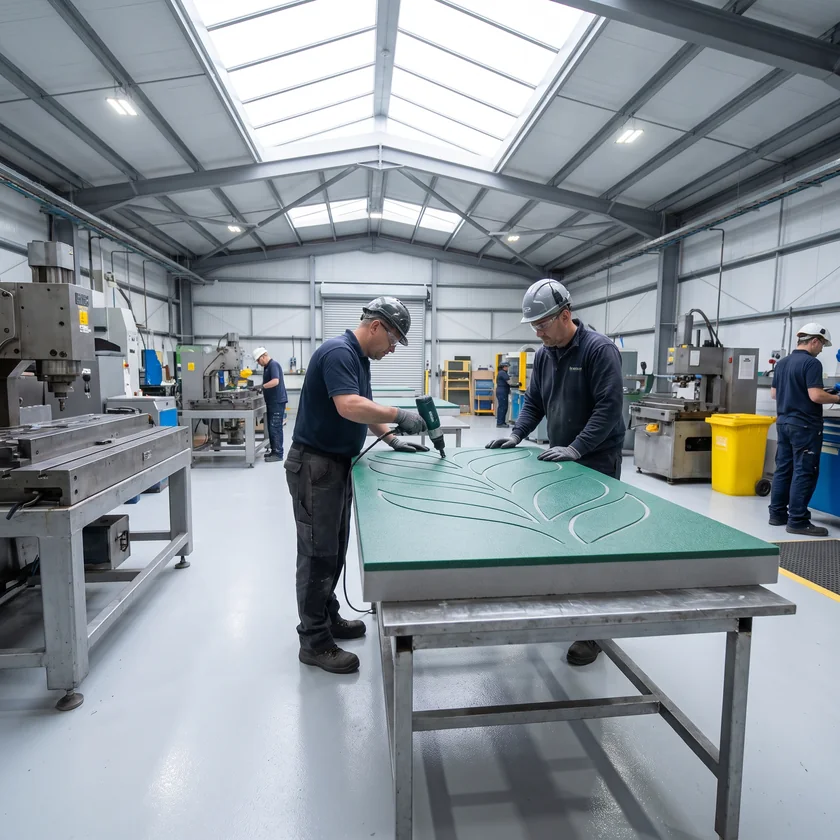
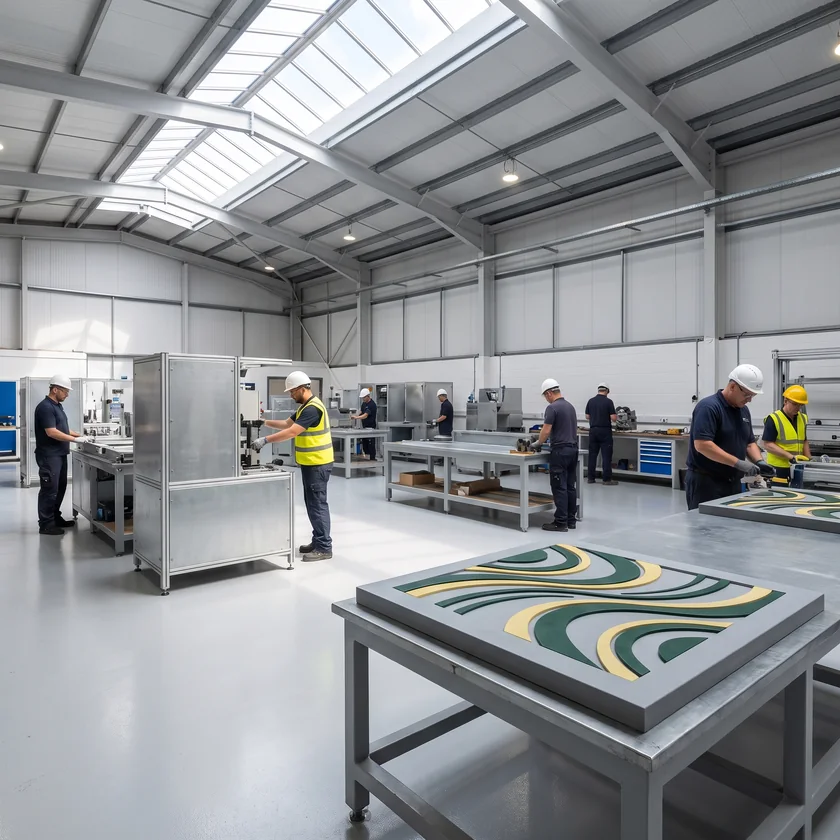
Theme panels are made from two-color HDPE sheet, a surface color over a different core color. The router engraves through the surface layer to reveal the core, so pictures, lettering and patterns are part of the panel itself.
Where a design needs more colors, pieces of other colors are cut on the same router and inlaid.
Play panels and signage
Manual game panels (spinners, mazes, abacus panels) for outdoor structures and soft play, and signage, are cut on the same routers.
Dealer and OEM branding
A dealer's logo can be engraved or inlaid on panels and signage, and roof decals carry the dealer's brand. Dealer and OEM options are on wholesale playground equipment. Panels are fixed to the frame with 304 stainless steel tamper-resistant fasteners, capped, at pre-assembly.
Steel, rotomolding, HDPE and soft play workshops all work from one approved drawing and one part list, scheduled to the same loading date.
10/ 13Foam + PVC · cut · sew · seal · close
Soft Play Fabrication Foam Cutting, PVC Covers, Industrial Sewing and Heat Sealing
Padding, covers, mats and netting for soft play, trampoline courts and ninja courses are made in our soft play sewing workshop. This is soft play manufacturing from foam block to finished, numbered cover.
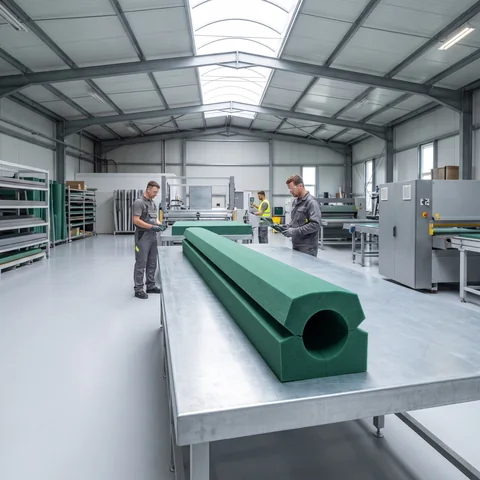
Cut foam
High-density sponge is cut to the shape of the frame section, deck board or wall it will cover. The cutting dimensions come from the steel frame on your drawing, so the foam matches the frame it wraps.
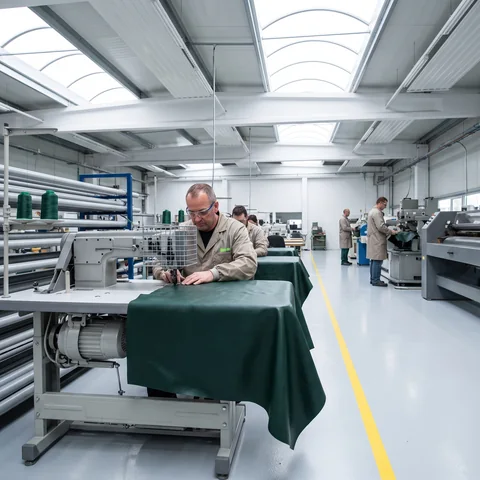
Sew
Fire-retardant PVC leather is cut to each piece and sewn around the foam on industrial sewing lines. Deck boards are wrapped in EVA foam and covered in PVC leather or carpet, in the colors on your drawing.
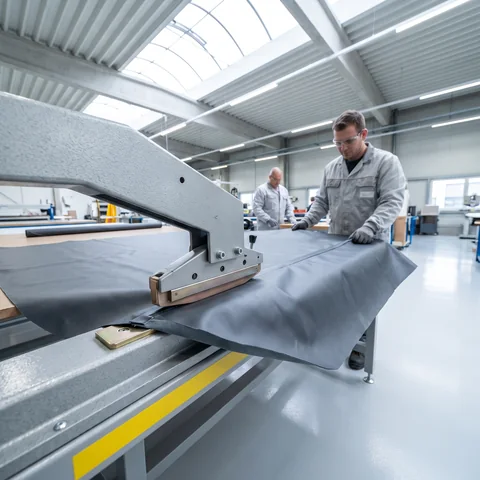
Seal
PVC edges are heat-sealed, so the cover edges are closed and smooth.
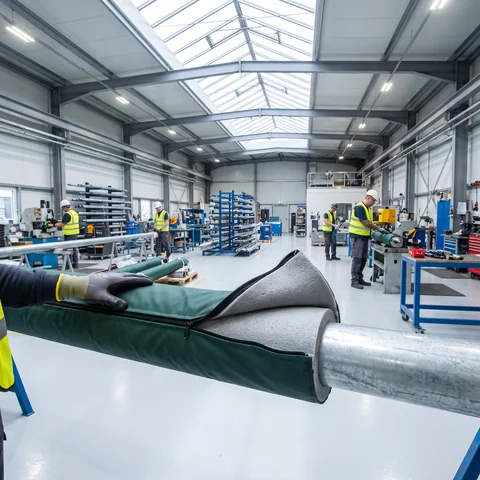
Close
Pipe padding covers are fitted with Velcro or zippers, so they can be taken off the Ø48 mm frame for cleaning or replacement. Deck covers and mats are made as fixed covers.
Trampoline and ninja padding
The same workshop sews frame-top pads, 50 mm spring-cover pads, wall pads for angled and back walls, and step pads for court edges, in the same fire-retardant PVC leather, fitted with Velcro straps to fix them to the frame.
Netting and labels
Knotless fire-retardant netting for dodgeball courts is edged and fitted to the court frame here too. Every padding piece, net and mat is labeled with a part number keyed to its structure number and listed on the packing list.
Batch checks on foam and PVC leather, and fire-retardant documents for your batches → Indoor playground equipment
11/ 13Partner · out and back
Partner-Built Parts in the Process Chain Galvanizing, Plastisol, Jump Beds, Fiberglass and Stainless
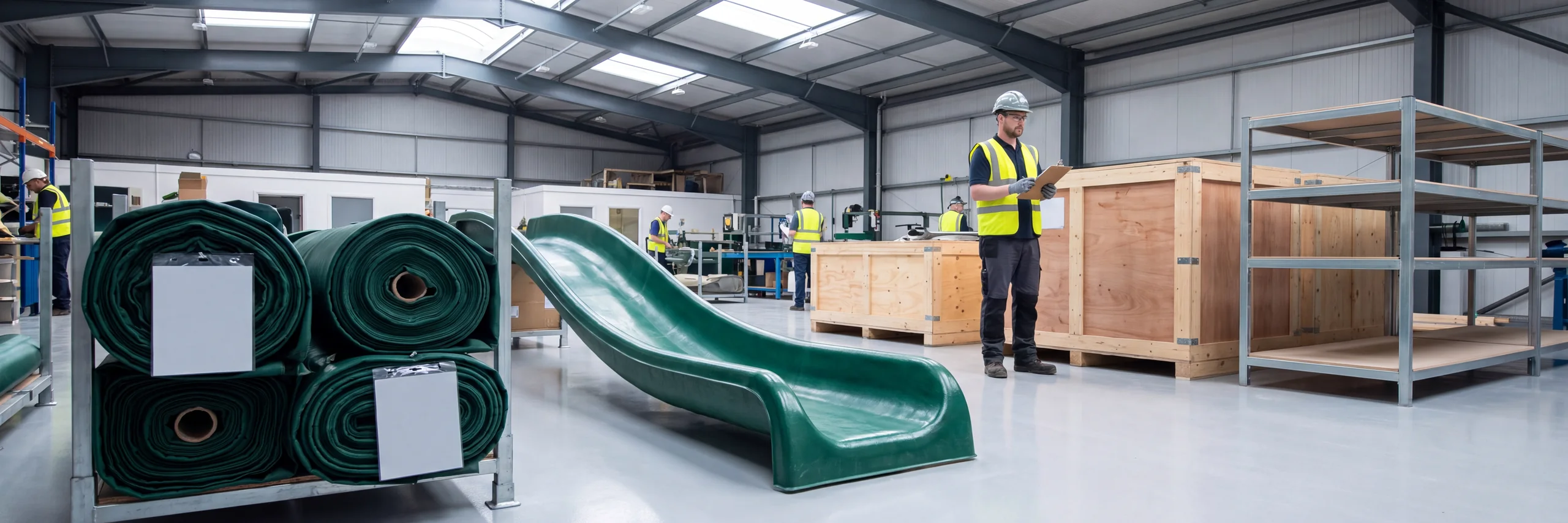
Some processes on your project are done at partner factories. Each one enters the route at a fixed point and comes back to our QC before loading.
Every partner factory was approved after a factory audit and sample approval, and every partner-built item is inspected by our QC against your drawing and spec before loading. The partner-factory program is on about us.
Hot-dip galvanizing
At a partner plant, between our welding and our own sweep blasting and powder coating.
Plastisol deck coating
At a partner coating plant, between our deck punching and fixing at pre-assembly.
Trampoline jump beds and springs
Each jump bed is ordered to the opening size of its own cell on your drawing, with its D-ring count matched to the spring holes of that cell, and labeled with its cell number.
Fiberglass and stainless
Fiberglass wave and drop slides, fiberglass theme figures and stainless steel slides.
Nature play timber
Debarked Robinia and larch pieces from a partner timber workshop, with steel connectors and footings from our steel workshop.
12/ 13All routes · cap · plug · number · pack
From Last Process to Packing Post Caps, Plastic Plugs, Part Numbers and Touch-Up Paint
When the last process on each part is done, the parts meet in the pre-assembly yard. A few finishing steps happen here, before the structure is disassembled and packed.
Cap
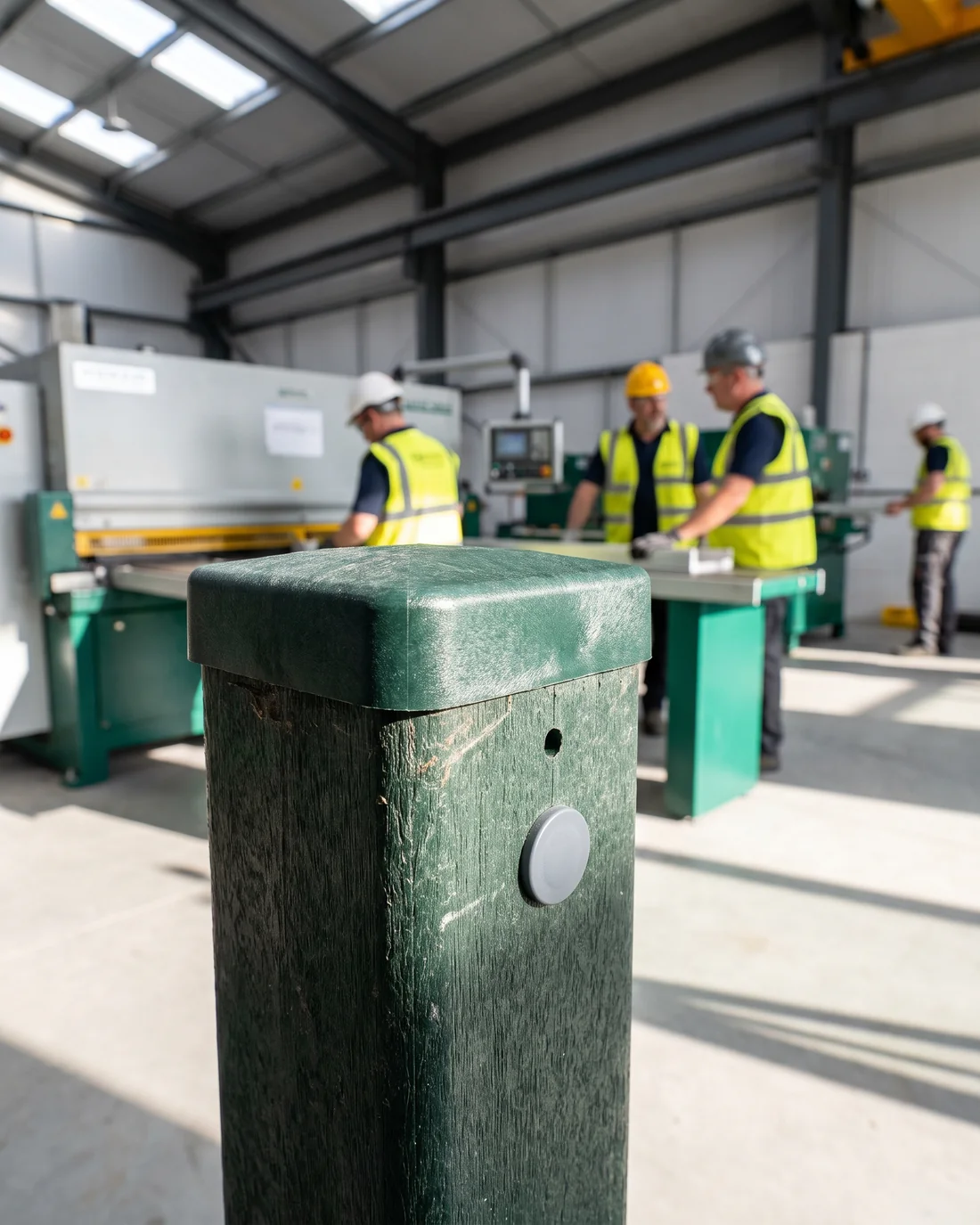
Every open post end is closed with a rotomolded LLDPE post cap, fitted at pre-assembly.
Plug
Vent and drain holes that are exposed on the finished structure are closed with plastic plugs after coating.
Assemble
Outdoor structures are pre-assembled in full, with every connection checked. Steel frames for soft play, trampoline courts and ninja courses are trial-assembled to check hole positions and connections, with padding test-fitted on sample sections.
The standards check at this step is on playground safety standards.
Number
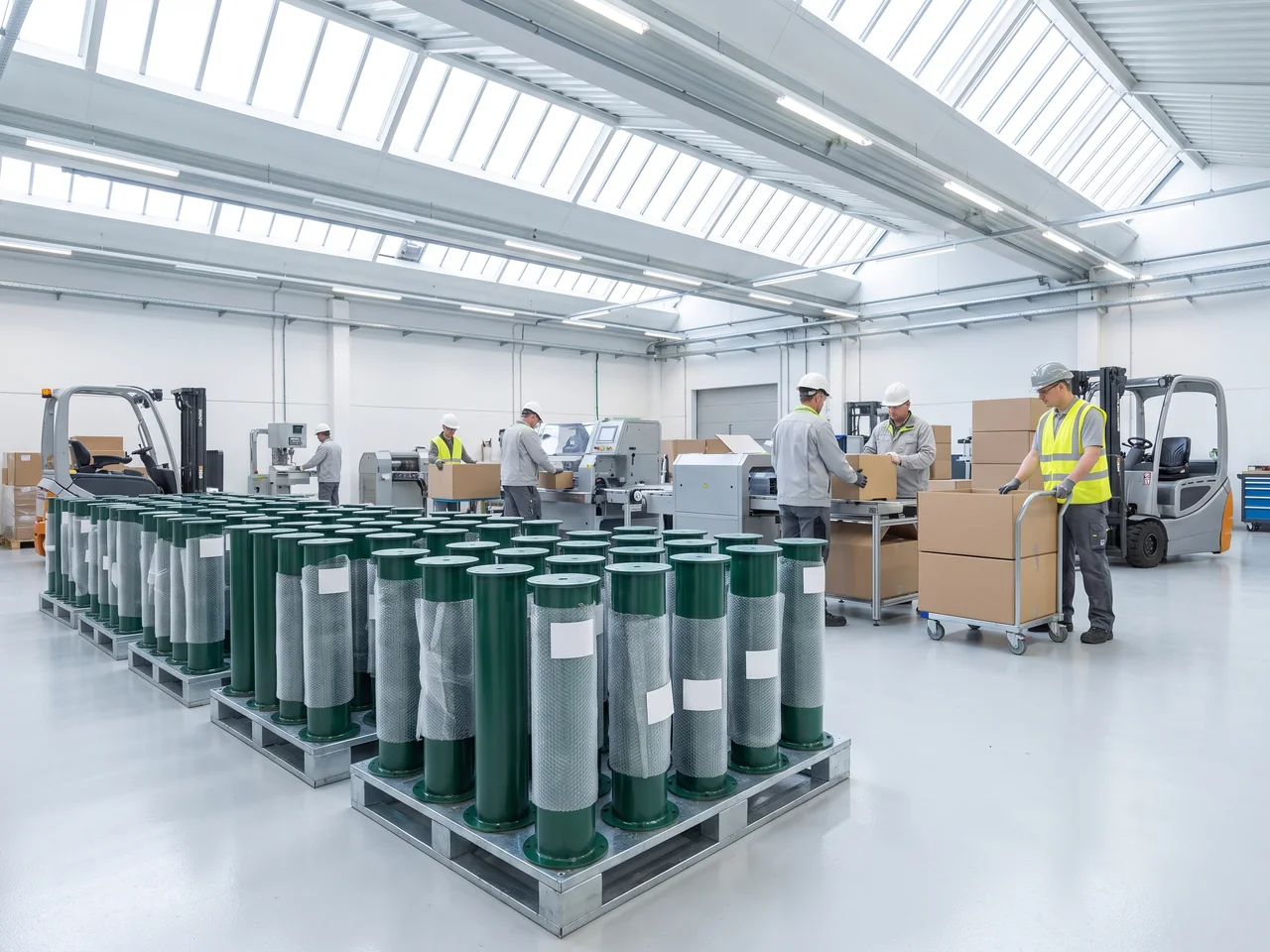
After disassembly, every part carries its part number from your installation drawing and is packed by installation sequence. Coated parts go in bubble film and cartons.
Pack
A touch-up paint in the color of your structure ships with the spare hardware kit, for holes your installer drills on site or marks from handling.
Full production and loading sequence → How we build playgrounds
 S1-014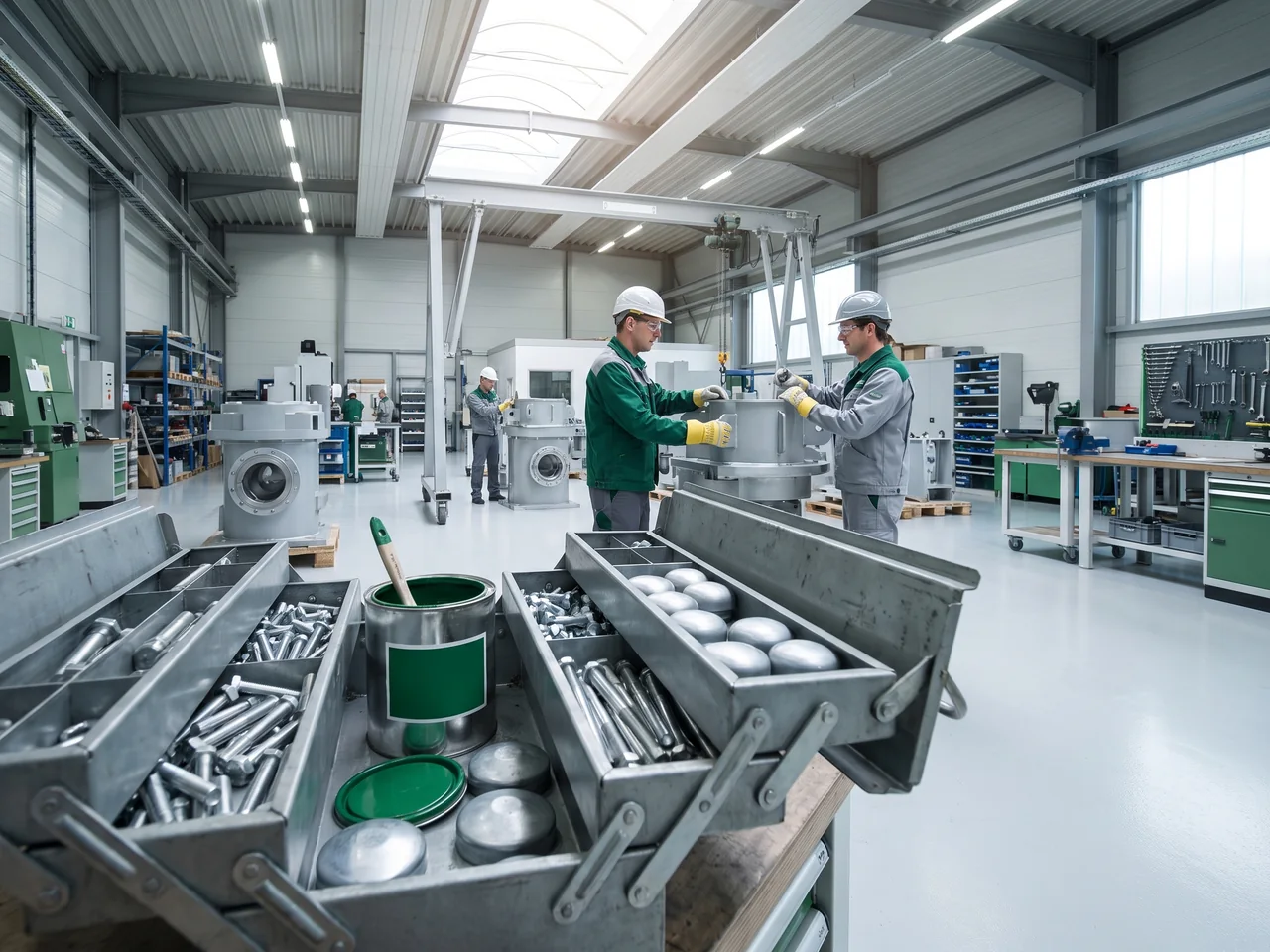
13/ 13Traveler · S1-014 · records attached
Manufacturing Records and Factory Visits What You Can See of Your Own Parts
Every process above leaves something you can see or ask for on your own project.
The photos, the video and the readings carry the part numbers from your installation drawing, so each record is of your own structure.
- 01
Material spec sheet
With your quotation: the galvanizing standard, the powder coat system, the RAL colors and every material.
- 02
Photo updates at four points
Production start, after coating, pre-assembly or trial assembly, and loading.
- 03
Pre-assembly video
Before packing, with close views of connections and part numbers.
TravelerPart S1-014
- Cut
- Bend
- Weld
- Grind
- Drill vents
- Galvanize
- Sweep blast
- Powder coat
- Cure
- Pre-assembly
→ Pre-assembled · numbered · packed
For dealers: layout drawings, 3D renders and quotation files are issued unbranded or under the dealer's brand.
- 04
QC readings on request
For your coating batches and rotomolded parts, kept with your project.
- 05
Factory visit or live video tour
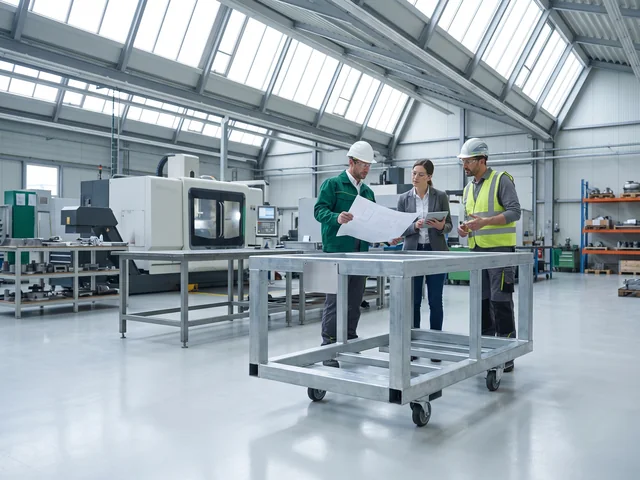
By appointment while your project is in production, to see your own frames, slides and panels in the workshops. Book a visit.
- 06
Electronic project package
Sent with the shipping documents.